Vintage Rose Teapot Floral Pattern: A Timeless Design for Modern Creators
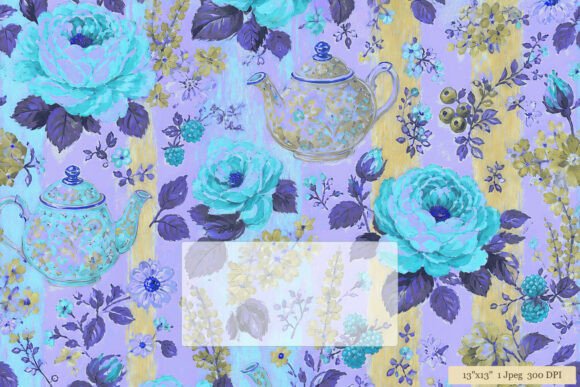
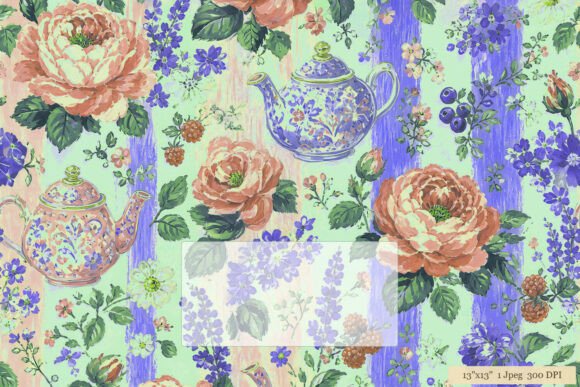
There is a distinct charm in designs that feel as though they have been passed down through generations, carrying the warmth of an English countryside tea room into the digital age. The Vintage Rose Teapot Floral Pattern captures this exact sentiment, blending hand-painted botanicals with ornate ceramics to create a surface design that is both nostalgic and fresh. This isn't just a background image; it is a complete aesthetic statement featuring oversized blooming peonies and roses in warm dusty pink and cream tones, set against a soft mint green backdrop with loose vertical stripes in cornflower blue.
At its core, this pattern is a celebration of the "cottagecore" movement and the enduring appeal of shabby chic interiors. It layers deep violet wildflowers, tiny blackberries, and blueberries alongside delicate sage green foliage, creating a lush, garden-party atmosphere. The inclusion of ornate hand-painted teapots in periwinkle blue and blush pink adds a whimsical, folk-art touch that elevates the design from a simple floral print to a storytelling piece. For designers, crafters, and small business owners, understanding how to leverage this specific visual language can transform ordinary products into sought-after collectibles.
The Art of Storytelling Through Surface Design
When you look closely at the Vintage Rose Teapot Floral Pattern, you see more than just flowers; you see a curated mood. The composition relies on a harmonious palette of dusty rose, periwinkle, mint, sage green, ivory, and soft lavender. These colors work together to evoke a sense of calm and romance, reminiscent of vintage chinaware collections found in antique shops. The watercolor panel insert featuring pale lilac botanical sprigs adds depth, breaking up the repetitive nature of a standard seamless repeat and offering a focal point for the eye.
This level of detail matters because modern consumers are increasingly drawn to products that feel personal and artisanal. In a market saturated with mass-produced, generic graphics, a design that mimics the texture and imperfection of hand-painting stands out. The loose brushwork of the stripes and the organic flow of the blooms suggest a human touch, making the final product feel like a labor of love rather than a factory output. Whether you are printing on fabric or designing digital stationery, this pattern brings an immediate layer of sophistication and warmth.
Practical Applications for Crafters and Makers
The versatility of this 13x13 inch, 300 DPI JPEG file makes it an invaluable asset for a wide range of creative projects. Its high resolution ensures crisp details even when scaled up for larger formats, while the square format is perfect for tiling in various software applications. Here is how different creators are putting this design to work in real-world scenarios.
Textiles and Home Decor
For those involved in Print-on-Demand (POD) or textile manufacturing, the Vintage Rose Teapot Floral Pattern is a goldmine for kitchen textiles. Imagine a collection of tea towels that feature the periwinkle teapots prominently, paired with matching aprons that showcase the full sweep of the peonies and wildflowers. The mint green background provides a neutral yet vibrant canvas that complements most kitchen color schemes, from rustic farmhouse to elegant grandmillennial styles.
Beyond linens, this pattern works beautifully on tote bags and pillow covers. The durability of the design holds up well under sublimation transfers, allowing the colors to remain vivid after washing. Small business owners often find that items featuring this specific "tea party" theme sell exceptionally well during spring and summer seasons, as well as around Mother's Day and wedding planning periods.
Paper Crafts and Stationery
In the world of scrapbooking and paper crafting, the intricate details of the blackberries, blueberries, and sage leaves offer endless possibilities for die-cutting and layering. The watercolor panel insert can be used as a journaling card background, providing a textured space for handwritten notes without overwhelming the text. Planners and organizers can utilize this design for divider pages or sticker sheets, adding a touch of whimsy to daily schedules.
Gift wrapping is another area where this pattern shines. Moving away from plain brown kraft paper or generic holiday wraps, using this floral design instantly elevates a gift presentation. It suggests care and thoughtfulness before the recipient even opens the box. The soft, romantic tones make it particularly suitable for bridal showers, baby showers, or birthday parties with a garden theme.
Digital Design and Mockups
Graphic designers and social media managers can integrate this digital paper into Canva projects, Procreate brushes, and Photoshop mockups. The seamless nature of the pattern allows it to wrap around digital objects like mugs, phone cases, or notebook covers in mockup generators. Because the design includes a mix of large-scale elements (the teapots and peonies) and smaller filler details (the berries and stripes), it scales effectively across different device sizes and print dimensions.
For content creators focusing on lifestyle aesthetics, this pattern serves as an excellent background for Instagram posts or Pinterest pins. The "English countryside" vibe aligns perfectly with current trends in home decor and slow living, helping brands connect with audiences who value heritage and natural beauty.
Strategic Considerations for Implementation
While the Vintage Rose Teapot Floral Pattern is visually stunning, successful application requires a few strategic considerations. First, consider the context of your audience. While the design appeals strongly to women aged 25–55 interested in home decor and crafts, the specific color palette—dusty pinks, periwinkles, and mints—is very gender-coded. If your target demographic leans towards masculine or ultra-modern minimalist tastes, this pattern might feel too busy or traditional.
Another factor is the density of the design. With oversized blooms, scattered wildflowers, and striped backgrounds, the pattern is rich and detailed. When applying this to small items like coasters or keychains, ensure that the key elements (like the teapots) aren't cut off awkwardly by the edges. You may need to adjust the scale or use the watercolor panel insert as a standalone element for smaller surfaces to maintain visual clarity.
Color accuracy is also paramount. The harmony between the dusty rose and the cornflower blue stripes relies on precise reproduction. When working with POD providers or local printers, always request a physical proof to check how the specific shades of sage green and periwinkle translate from screen to substrate. Digital screens often render these pastels brighter than they appear in print, which could alter the intended "vintage" mood if not managed correctly.
Embracing the Grandmillennial Aesthetic
The resurgence of patterns like the Vintage Rose Teapot Floral Pattern signals a shift in design preferences toward comfort, nostalgia, and authenticity. It bridges the gap between the traditional and the contemporary, offering a way to honor classic design principles while participating in modern digital commerce. Whether you are creating a line of sublimation transfers for a new Etsy shop or designing a wallpaper collection for a boutique interior design firm, this pattern offers a robust foundation.
By choosing a design that tells a story of garden parties, afternoon tea, and handcrafted beauty, you are tapping into a deep emotional connection with your customers. It transforms a simple transaction into an experience, inviting users to bring a piece of that idyllic English countryside into their own homes. As you explore the possibilities of this digital paper, remember that its true power lies not just in its colors or shapes, but in the feelings of warmth and nostalgia it evokes in everyone who sees it.